New Outer Space Stories - RSS Feeds
-
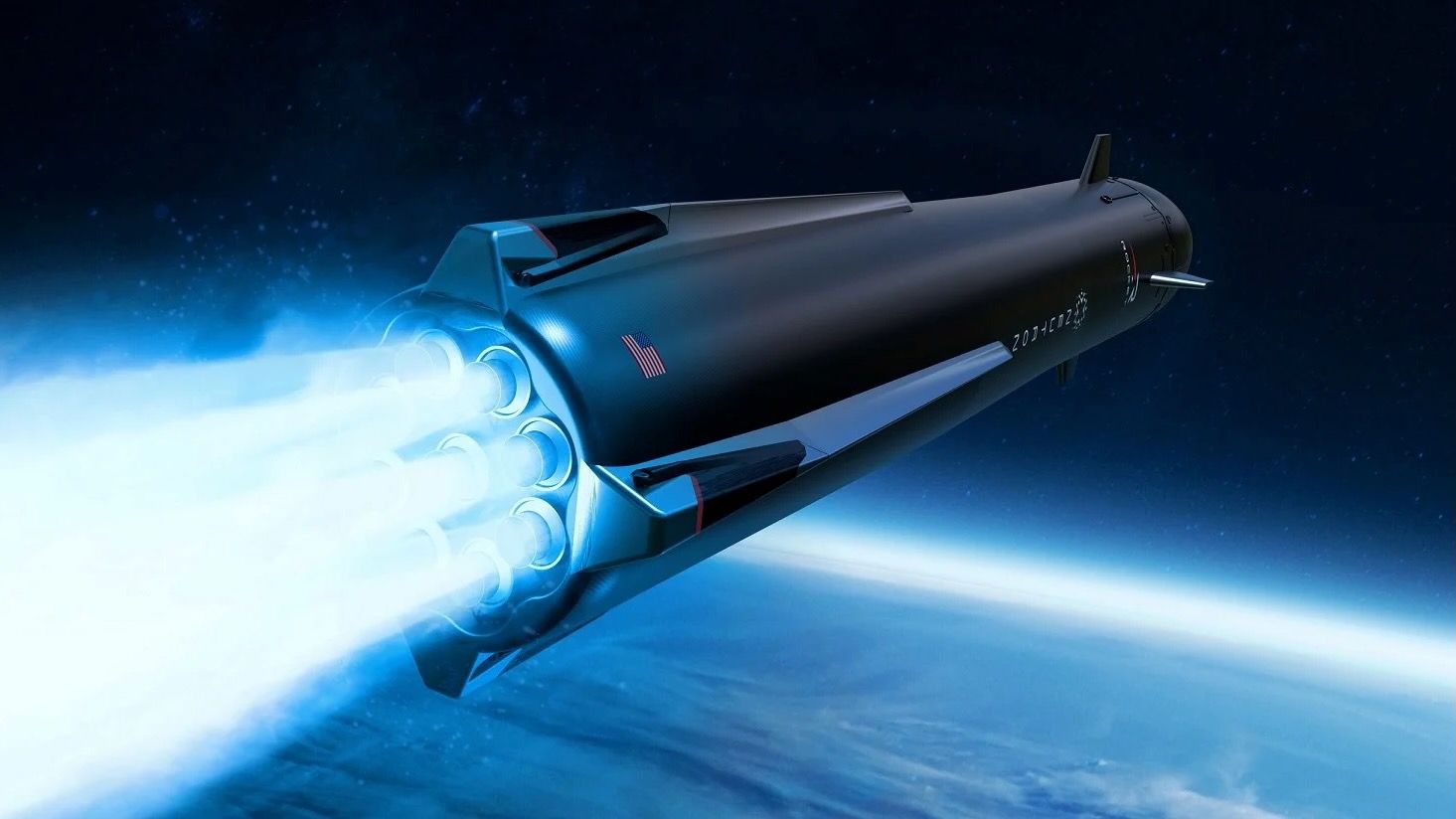
'There's tremendous demand': Rocket Lab raises price of Neutron launch from
$55 million to $70 million
-
Rocket Lab has raised the launch cost of its next-gen Neutron rocket by
more than 25%, an increase that reflects high demand amid a looming liftoff
bottlen...
1 hour ago
-
Planets Don't Just Disappear, But They Can Wobble Out of Sight if Their
Neighbour is Close Enough
-
[image: This artist's illustration shows a hot Jupiter, a giant planet very
close to its star with a very short orbital period. TESS watched one hot
Jupi...
4 hours ago
-
Researchers Discover New Lace Bug Species on Japan’s Remote Ogasawara
Islands
-
[image: Adult Omoplax desecta]DNA uncovered a hidden species among Japan’s
lace bugs and hints that a tree introduced by humans could help give rise
to ano...
15 hours ago
-
Earliest known compact quasar pair poses a black hole growth puzzle
-
The oldest pair of compact quasars ever observed has been found only 900
million years after the Big Bang. Scientists say there is no theoretical
explanati...
16 hours ago
-
35-Million-Year-Old Fossil Teeth from Thailand Reveal Rodent as Heavy as
Large Dog
-
[image: Hypothetical reconstruction of Yakamys sirindhornae. Image credit:
Yaowalak Chaimanee.]
When most people picture a giant rodent, they think of the ...
16 hours ago
-
Gerald H. Pollack: Electrically Structured Water | EU2013
-
At the EU2013 Conference, Gerald H. Pollack, PhD, gave this one-hour
presentation on the history, research, and ultimate breakthrough discovery
of electric...
3 days ago
-
Two giant black holes at the heart of one galaxy may circle each other
every 121 to 146 days and could merge in as little as 100 years
-
[image: Illustration of a glowing ring at a galaxy’s centre with two jets,
one straight and one curved, over faint radio contours.]
A hidden jet in Markari...
6 days ago
-
Organisation Release: Ghostly Cat’s Head Nebula lurks within sight of
Hubble and Webb
-
[image: Cat’s Head Nebula (Hubble WFC3, Webb NIRCam, and Webb MIRI images)]The
NASA/ESA Hubble and the NASA/ESA/CSA James Webb Space Telescopes recently
st...
1 week ago
-
The James Webb Space Telescope’s Most Stunning Discoveries of 2025
-
From biosignature gases on alien worlds to the oldest galaxy ever seen, the
James Webb Space Telescope made 2025 a landmark year for astronomy. Here
are th...
8 months ago
-
We test Celestron's 10-inch StarSense Explorer
-
*This scope uses your smartphone to put thousands of deep-sky objects at
your fingertips.*
3 years ago
-
Hidden Supersymmetry of Electrostatic Fields
-
Juan D. García-Muñoz, A Raya A hidden supersymmetry of electrostatic fields
is evidenced. Proposing an ansatz for the electrostatic potential as the
natura...
4 years ago
-
Scientists Uncover Warehouse-Full of Complex Molecules Never before Seen in
Space
-
Scientists have discovered a vast, previously unknown reservoir of new
aromatic material in a cold, dark molecular cloud by detecting individual
polycycl...
5 years ago
-
1메모리 6기가 peteuplink
-
1메모리 6기가 peteuplink
6 years ago
-
The Fall and Rise of Betelgeuse
-
With its recent uptick in brightness, Betelgeuse appears to be slowly
returning to normal. But will it? Astronomers urge us to keep watch.
The post The F...
6 years ago
-
Welcome to Catch a Star
-
School students around the world are invited to take part in the 2019 Catch
a Star astronomy writing contest. To participate, students should submit a
writ...
7 years ago
-
Astronomers discover extremely hot, pitch-black exoplanet
-
Using the Hubble Space Telescope, astronomers have discovered a most
unusual exoplanet that reflects 94% of the visible light given off by its
host star,...
9 years ago
-
Super Volcano! History's Great Secret: The Global Catastrophe of 535 AD
-
Super Volcano!
*History's Great Secret: The Global Catastrophe of 535 AD*
[image:
https://upload.wikimedia.org/wikipedia/commons/8/80/Super-volcano_Tie...
9 years ago
-
Astronomers observe star reborn in a flash
-
An international team of astronomers using Hubble have been able to study
stellar evolution in real time. Over a period of 30 years dramatic
increases in...
10 years ago
-
Mystery Plumes: Did the Sun Bruise Mars?
-
Strange plumes have been spotted high in the Martian atmosphere that have,
so far, defied explanation. Now scientists think space weather is to blame.
10 years ago
-
-
-
-
-